________________________Link__________________________
Bright Light via Molecular Control
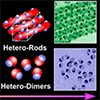
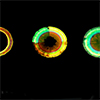
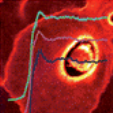
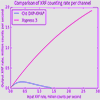
The availability of colloidal quantum dots (QDs) with well-defined size and shape has created intriguing opportunities for scientists and engineers to create materials with properties by design. Colloidal semiconductor QDs have been proposed as building blocks for the development of solution-processed optoelectronic devices, including next-generation photovoltaics, photodetectors and light emitting diodes (LEDs). Bringing this much-heralded technological potential to fruition depends on nanoscale charge-carrier dynamics, which are poorly-understood and therefore poorly-controlled. Consequently, the performance of prototype devices has, so far, has been limited.
Complete article here:
http://news.chess.cornell.edu/articles/2012/Hanrath05112012.html
________________________Link__________________________
Using Mutations to Control Protein Domain Swapping
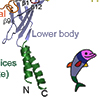
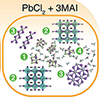
Many biological processes require the formation of protein complexes containing multiple copies of one or more types of polypeptide chain. It is critical that the protein chains involved correctly recognize each other and assemble into the proper sequence. One mechanism providing high specificity in protein-protein recognition and assembly is domain-swapping, in which structural elements such as β-sheets, which usually occur within a single protein domain, contain chain segments from two different protein molecules.
Complete article here:
http://news.chess.cornell.edu/articles/2012/Ha05102012.html
________________________Link__________________________
Cornell Makes Physics Fun at D.C. Science Expo
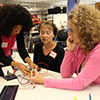
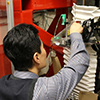
Communicating with light and building a photon factory were among activities led by Cornell scientists, staff and students meant to engage and inspire the public at the second USA Science and Engineering Festival in Washington, D.C., April 28-29.
Complete article from the Cornell ChronicleOnline here: http://www.news.cornell.edu/stories/May12/dcExpo.html
or see the (PDF)
________________________Link__________________________

Wind Turbine Challengers 'catch the breeze'
Homemade wind turbines dotted the Ithaca Children's Garden at Cass Park April 22 for the final judging of the "Catch the Breeze Wind Turbine Challenge" competition.
Since the competition's March 10 kickoff, participants have designed and built wind turbines using inexpensive materials while applying basic physics principles. In the process, they learned how wind energy is converted into electrical energy.
Complete article from the Cornell ChronicleOnline here: http://www.news.cornell.edu/stories/April12/windTurbine.html
or see the (PDF)
________________________Link__________________________

X-ray Absorption and Emission Spectroscopy - Determining effects of N2 coordination on the electronic structure of bis(imino)pyridine iron (PDI) pre-catalysts
The largest scale application of homogeneous catalysis (by dollar amount of product sold) is hydrosilylation, a process used to manufacture chemicals used in consumer products from iPhones to beer. On the industrial scale, the catalyst used is platinum-based, but the reaction can now be done using a cheaper, iron-based system in which no disadvantageous side products are formed.
Complete article here:
http://news.chess.cornell.edu/articles/2012/Stieber04242012.html
________________________Link__________________________

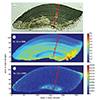
A scanning electron microscope image of the side of a stack of nanosheets. The inset is an optical microscope image of a single exfoliated nanosheet, to show it is optically transparent.
Nontoxic Nanosheets Could Turn Waste Heat into Power
Science writer Anne Ju writes a Cornell Chronicle article highlighting the work of CHESS user Richard Robinson, whose group uses CHESS to characterize nanosheets. She writes: “Cornell materials scientists have developed an inexpensive, environmentally friendly way of synthesizing oxide crystal sheets, just nanometers thick, which have useful properties for electronics and alternative energy applications. The work, led by Richard Robinson, assistant professor of materials science and engineering, is featured on the cover of the April 7 Journal of Materials Chemistry (Vol. 22, No. 13)".
The paper discusses, among other things, how x-ray synchrotron studies reveal how the 2D crystals stack in a turbostratic arrangement with rotational misalignment along the stacking axis. They point out that graphene has been well studied, but that other materials open new grounds for exploration.
Complete article from the Cornell ChronicleOnline here: http://www.news.cornell.edu/stories/April12/robinsonNaCo.html
or see the (PDF)
________________________Link__________________________
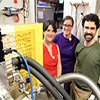
NYC teachers learn hands-on activities to inspire students
50 teachers attend the March 24 session at Weill Cornell Medical College, which featured seven workshops and a keynote address from Larry Bonassar, Cornell associate professor of Biomedical and Mechanical and Aerospace Engineering, on cartilage tissue engineering. The series, sponsored by the Cornell Center for Materials Research (CCMR), has been offered to New York teachers twice a year since 2007 and complements state education standards. It is a collaboration with the Cornell Institute for Biology Teachers, Cornell Laboratory for Accelerator-based Sciences and Education, Boyce Thompson Institute for Plant Research, Center for Nanoscale Systems and Weill Cornell.
Complete article from the Cornell ChronicleOnline here: http://www.news.cornell.edu/stories/March12/NYCSciSampler.html
or see the (PDF)
________________________Link__________________________
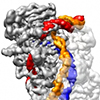
Turbine Challenge
Over 120 people gathered at the eXploration station to challenge themselves to design, construct, and then optimize their own wind turbine for the kickoff of our Catch the Breeze Wind Turbine Challenge on Saturday, March 10, 2012.
Complete article from the TompkinsWeekly here: (PDF) See page 5.
________________________Link__________________________
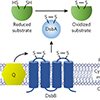
Putting a New Spin on KCuF3
Scientists who study condensed matter physics (CMP) try to explain macroscopic electrical, magnetic & thermal properties of solids using models of atomic scale interactions of the constituent atoms and electrons. One of our great theoretical successes, the band structure of semiconductors, has literally transformed our world with the invention and evolutionary applications of the common transistor. To this day new observations of physical phenomena continue to challenge condensed matter physicists and have led to much deeper understanding of materials that lead, in turn, to a host of new technologies and products that we all get to enjoy.
Complete article here:
http://news.chess.cornell.edu/articles/2012/NewSpin03292012.html
________________________Link__________________________
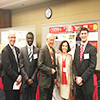
Hasan Padamsee receives IEEE Particle Accelerator Science and Technology Award
Hasan Padamsee has been awarded this year's IEEE Particle Accelerator Science and Technology Award For contributions to the science and technology of RF superconductivity.
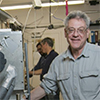
The prize recognizes individuals who have made outstanding contributions to the development of particle accelerator science and technology. Hasan joined Cornell's SRF group in 1973 and was its head from 1987 to 2009, during a period when gradients pushed the theoretical limit, and new techniques in polishing and cavity repair led to dramatically improved performance and reliability, successes which are to no small measure attributable to Hasan's contributions. Hasan also oversaw the development and implementation of the SRF cavities in CESR, using a design that has now been transferred to two industrial vendors and is used at seven other accelerators around the world. Additionally, Hasan authored the two defining text books on SRF accelerating structures.
Text and image from the SRF group at Cornell site:
http://www.lepp.cornell.edu/Research/AP/SRF/WebHome.html
________________________Link__________________________
Junk Genies of Science
Every week, eight to 12 middle school students from the Greater Ithaca Activities Center (GIAC) afterschool program build complex science exhibits in the eXploration station behind Wilson Lab. Dubbed the "Junk Genies of Science", they create models that exhibit principles of physics.
Full article here:
http://news.chess.cornell.edu/articles/2012/JunkGenie03062012.html
________________________Link__________________________
Honeycomb Structure Responsible for Bacteria's Extraordinary Sense
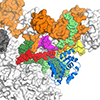
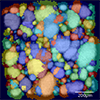
Researchers in the lab of Brian Crane, professor of chemistry and chemical biology, with collaborators in the lab of Grant Jensen at the California Institute of Technology, have mapped out the honeycomb-like hexagonal arrangement of these receptor complexes in unprecedented detail.
Full article here:
http://news.chess.cornell.edu/articles/2012/chemarrays.html
________________________Link__________________________
Cornell ERL Prototype Successes Grow
The goal of the Energy Recovery Linac (ERL) project at Cornell is to create a new type of continuous-duty x-ray source, and to do so requires making ultra-low emittance electron bunches and accelerating and recovering their energy in a superconducting linear accelerator. Three of the biggest R&D challenges are to prove it possible to build an electron injector with (1) sufficient current, (2) sufficiently small emittances, and a superconducting linac with (3) sufficiently small energy consumption.
Full article here: http://news.chess.cornell.edu/articles/2012/ERLgoals02152012.html
________________________Link__________________________
CHESS User Named the 2012 Asian American Engineer of the Year
CHESS is proud to note that CHESS user, Hongyou Fan, working at Sandia National Laboratories, Albuquerque, New Mexico has been named the Asian American Engineer of the Year (AAEOY) 2012 by the Chinese Institute of Engineers USA (CIE/USA). Hongyou is well known for his innovative work in the field of nanomaterials and self-assembly.
Full article here: http://news.chess.cornell.edu/articles/2012/HFan02072012.html
________________________Link__________________________

Sirtuins, Post-translational Modifications, and the Impact of Crystal Structures
For some proteins, more is needed after their translation from DNA before they are functional. Small molecules are attached to certain amino acids in the protein in a process called post-translational modification. If the attachments are later removed, the behavior of the protein changes. The family of proteins called "sirtuins" is responsible for such removals in a number of biological systems. The sirtuins have attracted a great deal of interest from a broad biological community because of their suggested roles in the regulation of gene transcription and chromatin structure, as well as DNA repair and genome stability, cell metabolism, and perhaps most importantly, their potential connections to disease states (e.g. cancer) and aging.
Full article here: http://news.chess.cornell.edu/articles/2012/Sirtuins01312012.html
________________________Link__________________________

Protein Shows Conformational Fluctuations at Cryogenic Temperatures
Proteins must fluctuate in order to perform cellular functions, such as enzymatic catalysis, protein-protein interactions, and interactions with DNA and RNA. When proteins are cooled the fluctuations dampen and eventually stop, typically at 200 - 240 K. This is called a protein dynamical transition. Proteins below the transition temperature show no appreciable biological function. Above the transition temperature flexibility is restored and the protein becomes increasingly biologically active.
Full article here: http://news.chess.cornell.edu/articles/2012/ProCryo01112012.html
________________________Link__________________________

The Ring of Life: X-ray Scattering Reveals Secrets Leading to DNA Synthesis
Synthesis of DNA is an essential foundation for all life on Earth. In all organisms, the precursors for DNA (deoxyribonucleotides) are made from the precursors for RNA (ribonucleotides) using an enzyme called ribonucleotide reductase (RNR). RNRs are classified by the metal-containing cofactor that is used to generate a radical essential for catalysis. Class Ia RNRs (used by all eukaryotes and many aerobic bacteria) are unusual in that the nucleotide-binding sites and the radical-generating metallocofactor are housed in separate homodimeric proteins.
Full article here: http://news.chess.cornell.edu/articles/2012/ROL01062012.html